Custom balloons come in three materials that behave nothing alike, and choosing the wrong one is how a brand ends up with deflated logos before the doors open, or a bin full of foil after a single afternoon. Latex, foil, and bubble balloons differ in how long they hold helium, how your artwork prints, how they look inflated, what they cost per piece, and how they are thrown away. Treat the choice as a spec decision rather than a color decision and the rest of the order gets easy. Here is how the three compare on the points that actually matter.
Latex: natural rubber, printable, and biodegradable
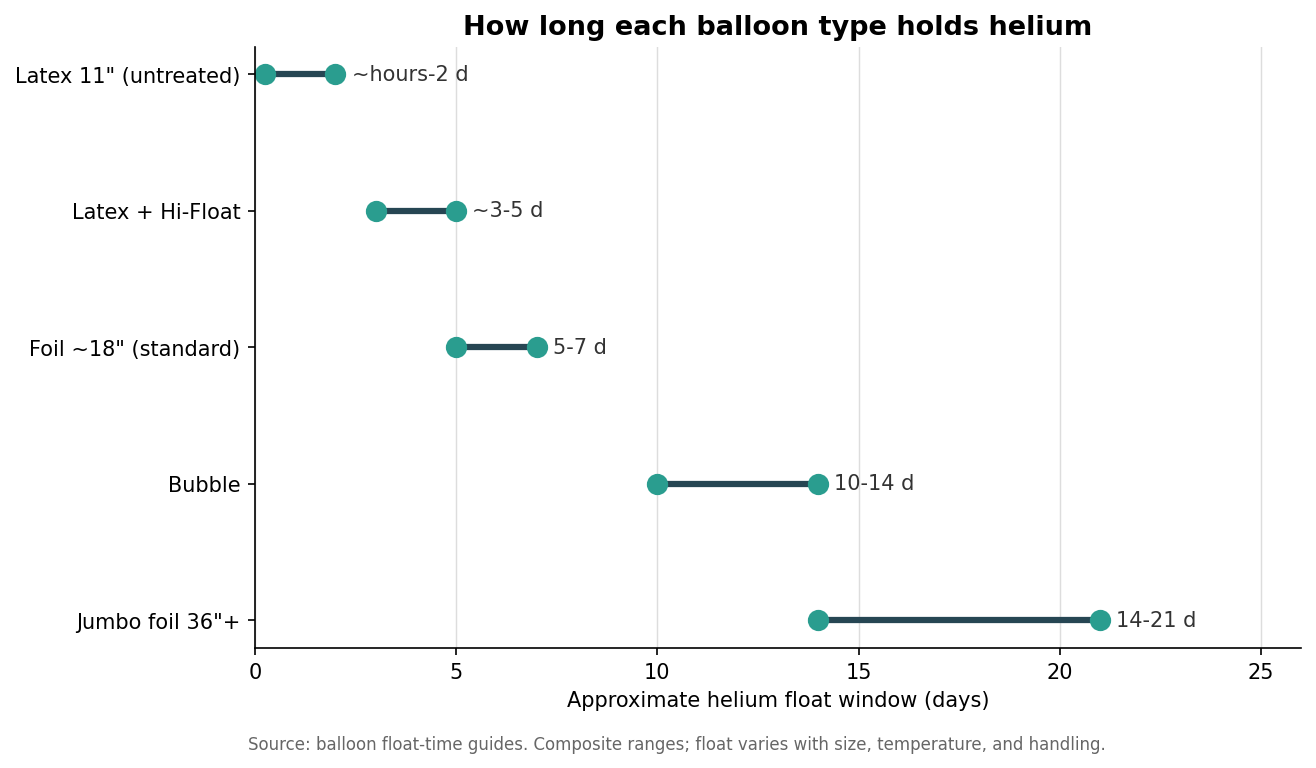
Latex is the workhorse of promotional balloons. It is made from natural rubber, which means genuine latex biodegrades over time rather than lingering the way plastics do — the only compostable option of the three. It screen-prints cleanly with a logo, comes in a standard ladder of sizes (commonly 9, 11, 14, 17, 24, and 36 inches, with the 11-inch as the default), and carries the lowest unit cost by a wide margin. The trade-off is helium retention: an untreated latex balloon holds a float for only a few hours up to about two days. A gel coating applied inside the balloon (sold under names like Hi-Float) slows the leak and buys several more days. Print minimums tend to be higher on latex because each run is set up individually, so it rewards volume. Latex also inflates to different diameters depending on how much helium or air you put in, which is a detail worth remembering when you are sizing a garland or matching balloons across a display — the same 11-inch balloon can look noticeably different under- versus fully inflated. For most promotional work, the combination of low cost, clean printing, and compostability makes latex the starting assumption unless a longer float or a specific shape pushes you elsewhere.
Foil (mylar): holds helium for days to weeks
Foil balloons — also called mylar — are made from a metallized nylon film that barely lets helium escape, which is their whole advantage. A standard 18-inch foil floats roughly five days to a week, and jumbo shapes hold two to three weeks. They come as numbers, letters, and molded shapes, take a printed logo, and give that reflective metallic finish. Two caveats decide whether they fit: they cost more per piece than latex, and they are not biodegradable, so they have to be deflated and thrown away rather than released — a released foil balloon is also a genuine hazard around power lines. Minimums are often lower than latex, which makes foil practical for smaller runs where the display needs to survive several days. Foil also self-seals at the valve, so it can be inflated, deflated, and often re-inflated for a repeat use — a real advantage for a recurring event or a reusable storefront piece, where a latex balloon would simply be discarded after one outing.
Bubble and specialty balloons
Bubble balloons are the newest of the three: a stretchy, transparent plastic (often a polyurethane film) blown into a rounded, three-dimensional clear sphere that can be filled with confetti or nested around a second balloon. They hold helium for about ten days to two weeks, splitting the difference between standard and jumbo foil. The look is premium and photograph-friendly, and the price matches — these are centerpiece balloons, not giveaway quantities. Like foil, the plastic film is not biodegradable and belongs in the trash after use. Reach for bubble balloons when a single striking display matters more than covering a room.
How the material changes your custom order
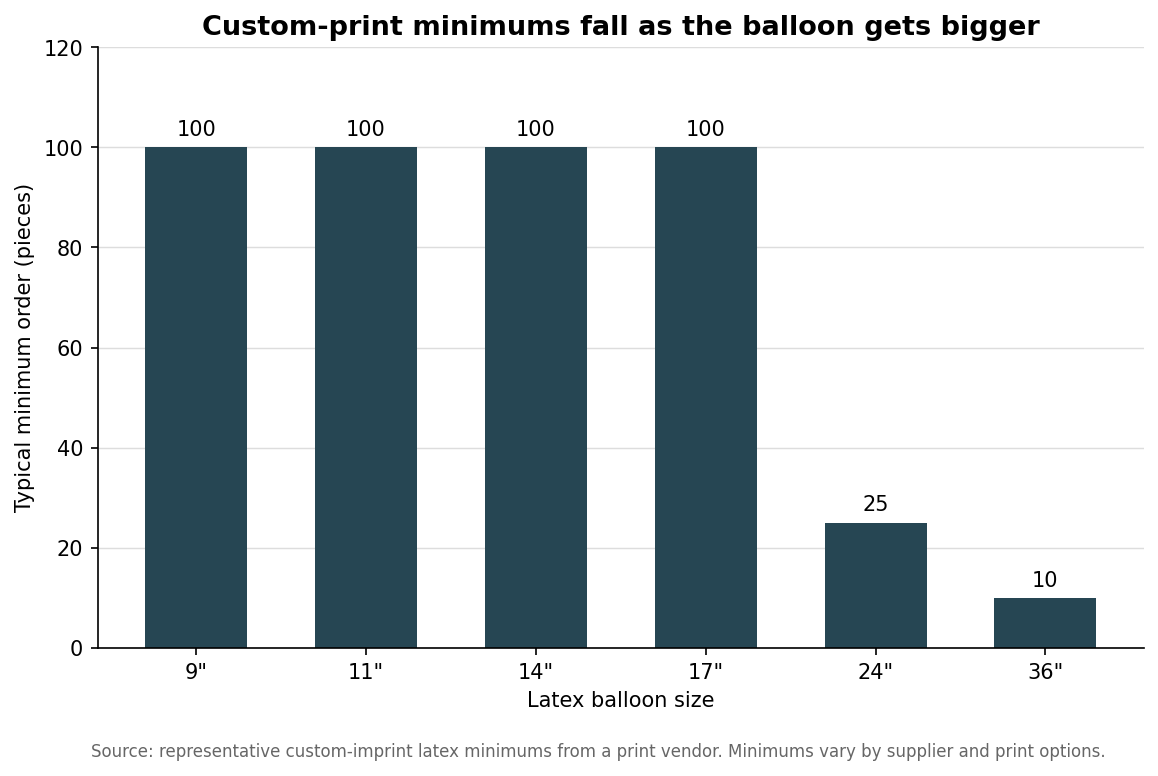
The print spec rides on the material. On latex, a single color printed on one side is the economical default; adding a second side or a second ink color raises both the price and the minimum quantity you have to order, because each combination is a separate setup. Print area scales with balloon size — a bigger balloon carries a bigger mark — but a balloon is only fully round at its rated inflation, so artwork has to be sized to the inflated diameter or the logo stretches and distorts. Most print pricing bundles the setup and ink into the per-run cost, and standard production at Get Custom Balloons ships in about 2 weeks after mockup approval, with faster turnaround available through express shipping. One useful pattern in the minimums: the larger the balloon, the fewer you have to buy, because the big sizes are ordered in far smaller counts.
Choosing by float window, print, and disposal
The decision comes down to three questions. How long does it need to float, what does the artwork require, and how will it be disposed of? If you need a lot of branded balloons for a single day at the lowest cost, latex is the answer, and it is the choice if compostability is on your checklist. If the display has to last a week or more, or you need a specific number or shape, foil earns its higher unit price by not deflating. If you want one premium, three-dimensional centerpiece for photos, a bubble balloon delivers a look the other two cannot. Many of the best displays mix materials — a latex garland anchored by a foil milestone number, say — so you are rarely locked into one. Whatever the mix, confirm the inflated diameter, the number of print sides and ink colors, and the lead time before you place the order, and the balloons that arrive will be the ones you pictured.